I Made this Viral Billboard Using Marketing Psychology...
Summary
A viral billboard was created using Jonah Berger's six principles from the book "Contagious" to promote Ahrefs' free SEO course. The project navigated challenges like high costs and legal hurdles, ultimately adapting to a mobile billboard truck. This case study demonstrates how applying psychological triggers can make marketing content highly shareable and memorable.
Key Takeaways
- 1The project aimed to hit all six principles from Jonah Berger's book "Contagious" to maximize virality.
- 2The initial plan for a static billboard was abandoned due to high costs ($25,000 for 4 weeks) and legal issues, leading to a pivot to a mobile billboard truck.
- 3The core message leveraged a real YouTube comment from a user whose life was transformed by Ahrefs' free SEO course.
- 4Practical Value was demonstrated by offering a free SEO course that helps build careers and create entrepreneurs.
- 5Social Proof was integrated by showcasing a real user testimonial, implying others benefit from the course.
- 6Social Currency was achieved by highlighting the transformative power of the course, suggesting users can also "level up" their lives.
- 7Emotion and Stories were embedded by using a compelling narrative of overcoming hardship through the Ahrefs course, trimmed for impact: "I had nothing, just the mattress. Then I found Ahrefs. The site that I built got me out."
Marketing Psychology Framework
The project's foundation is Jonah Berger's book "Contagious," which outlines six principles for viral content. The goal was to incorporate all six principles into a single advertisement to maximize its potential for virality.
These principles are:
- Practical Value
- Public
- Social Currency
- Stories
- Emotion
- Triggers By systematically applying each principle, the aim was to create an ad that not only captures attention but also encourages sharing and long-term recall. The more triggers an ad hits, the higher its chance of catching on and spreading organically.
Initial Concept and Challenges
The initial idea was to create a billboard for Ahrefs' free SEO course, which has garnered over 3.5 million views. The course offers significant practical value by teaching a useful skill that has helped many build careers and businesses . The initial call to action was "Learn SEO for free."
However, securing a traditional billboard proved challenging. Costs were prohibitive, with one company quoting $25,000 for a 4-week period . Legal issues with contract terms further complicated matters, leading to the abandonment of the static billboard plan . This forced a pivot to an alternative advertising medium.
Adapting to a Mobile Billboard
After the static billboard plan failed, the idea of a mobile billboard truck emerged as a viable alternative. This allowed for flexibility and direct engagement with target audiences, particularly around high-traffic areas like Fenway Park .
Key metrics:
- The mobile billboard could circle tens of thousands of fans.
This adaptation allowed the project to proceed despite initial setbacks, demonstrating resilience and creative problem-solving in marketing. The mobile format also offered unique opportunities for real-time interaction and content capture, which further supported the viral marketing objectives.
FAQ
What is the main insight from I Made this Viral Billboard Using Marketing Psychology?
A viral billboard was created using Jonah Berger's six principles from the book "Contagious" to promote Ahrefs' free SEO course. The project navigated challenges like high costs and legal hurdles, ultimately adapting to a mobile billboard truck. This case study demonstrates how applying psychological triggers can make marketing content highly shareable and memorable. One important signal is: The project aimed to hit all six principles from Jonah Berger's book "Contagious" to maximize virality.
Which concrete step should be tested first?
The project aimed to hit all six principles from Jonah Berger's book "Contagious" to maximize virality. Define one measurable success metric before scaling.
What implementation mistake should be avoided?
Avoid skipping assumptions and execution details. The initial plan for a static billboard was abandoned due to high costs ($25,000 for 4 weeks) and legal issues, leading to a pivot to a mobile billboard truck. Use this as an evidence check before expanding.
Related Summaries

What Is Semrush? (What Is SEMRush And What Does It Do?)

Free Course How To Make $100k A Month AI Static Image Ads Step-By-Step

How To Build A $250k A Month Business With AI

Omnisend Tutorial for Beginners 2026 (Campaigns, SMS & Automations)

Watch This If You Have a Service Business

The Blueprint to Monetize on YouTube From Day 1

Email Marketing For Beginners 2026 (Step-by-Step Guide)

How To Get Members (Traffic Sources) | Skool News #46

You're Wasting Money Trying to Get B2B Clients
Email Marketing Tutorial for Beginners (2026)
S15 E9: The Next Era of DTC

The Next Era of DTC

3 Storytelling Email Frameworks That Make People Want More

Before You Fix Your Sales Team, Fix THIS First | The Bedros Keuilian Show E0179

The $3.7 Billion Subscription Machine: How Hims & Hers Disrupted American Healthcare

The DTC Playbook Behind RYZE's $600M Mushroom Coffee Empire
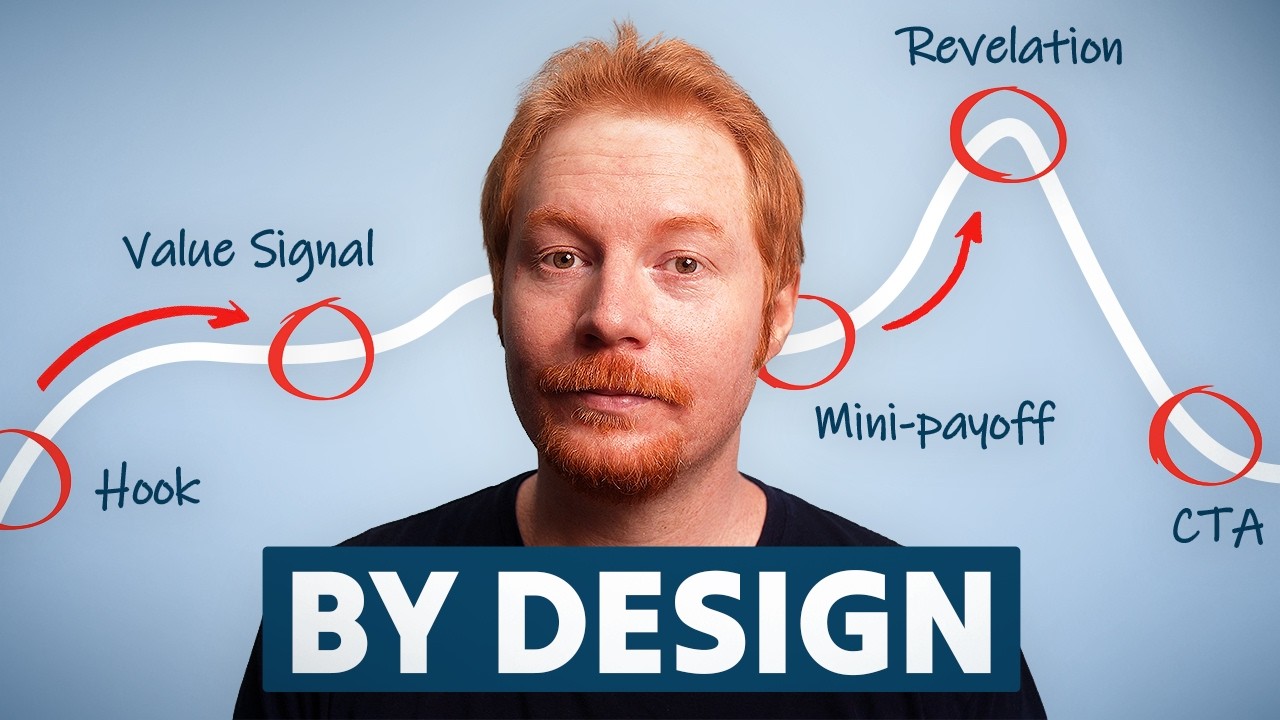
Why Some YouTube Videos Are Impossible to Stop Watching
S15 E7: More Website Design Lessons From the Best Brands

Website Design Lessons From the Best Brands
